

Eating Disorders and Obesity Treatment
This information is general in nature and does not replace personalised professional advice. Please contact your healthcare team if you have any questions or concerns.
What is an eating disorder?
An eating disorder is a serious mental health condition that affects how a person thinks about food, eating and their body. It isn’t just about “eating too much” or “too little”. Eating disorders can affect physical health, emotional wellbeing and personal relationships (1,2).
Common eating disorders include:
Anorexia nervosa (AN)
An eating disorder where a person severely restricts food intake due to an intense fear of gaining weight or a strong focus on body shape and weight. It can occur in people of any body size and may sometimes be overlooked when someone is in a larger body [1,2].
Bulimia nervosa (BN)
An eating disorder involving repeated episodes of eating large amounts of food with a feeling of loss of control, followed by behaviours to try to compensate, such as vomiting, excessive exercise or misuse of laxatives (1,2)
Binge eating disorder (BED)
Binge eating disorder (BED) An eating disorder characterised by repeated episodes of eating large amounts of food in a short period of time, often with a feeling of loss of control. Unlike bulimia, these episodes are not regularly followed by behaviours to try to compensate (1-3).
Other specified feeding or eating disorders (OSFED)
A category used when someone has symptoms of a feeding or eating disorder that cause significant distress or impact daily life but do not meet the full criteria for a specific eating disorder. A diagnosis of OSFED does not mean the symptoms are less serious (1).
Eating disorders can occur at any body size. They are not defined by weight alone. They involve patterns such as severe restriction, loss of control around food, strong fear of weight gain, or ongoing distress about eating (4).
What is disordered eating?
Disordered eating is a sign of an unhealthy relationship with food and eating, but it might not be a full illness yet. Disordered eating is often a warning sign of a more serious problem and something that needs attention (5,6).
These behaviours may include:
Strict food rules (5)
Repeated dieting (6)
Skipping meals (5,6)
Emotional eating (6)
Nibbling and picking throughout the day (6)
Self-induced vomiting (5,6)
Laxative misuse (5,6)
Disordered eating is more common in people who have struggled with weight for many years (5).
Appetite changes with obesity treatment
Obesity treatments are designed to help the brain and stomach talk to each other more effectively. As a result, obesity treatment can:
Reduce how hungry you feel (7,8)
Help you feel full more easily (8)
Reduce constant thoughts about food (7)
Make smaller amounts of food feel satisfying (7)
These changes are expected and it becomes normal to feel less hungry or to feel full much faster. This appetite suppression alone is not an eating disorder (7-9).
Eating disorders are common in people living with obesity
Many people who seek obesity treatment already have a long history of dieting, weight changes and challenges around food (3,10). However, they may not believe they have an eating disorder because there is a common misconception that eating disorders only affect people at a “normal” weight. This is simply not true. Many people living with obesity also experience disordered eating (4).
Research shows that people seeking obesity treatment are more likely to have experienced:
Binge eating disorder (3,11)
Feeling out of control around food (3)
Long histories of restrictive dieting (11)
Weight cycling (losing and regaining weight (12)
Ongoing focus or worry about food and weight (11)
In many cases, eating disorders or disordered eating that exist before treatment can continue during and after treatment (9). Speaking openly with your healthcare team before starting obesity treatment can help ensure that any disordered eating patterns or eating disorders are identified and supported as part of your overall care.
Eating Disorders, disordered eating and obesity surgery
Screening for eating disorders and disordered eating by a qualified health professional before surgery is very important (13). If someone has an eating disorder, they may need extra support to help ensure the surgery is safe and successful. However, having a history of disordered eating or a current eating disorder does not automatically exclude someone from having surgery (9,14).
For many people, eating patterns improve after bariatric surgery (9,15).
After bariatric surgery, research shows that:
Binge eating often decreases (16,17)
Feeling out of control around food becomes less common (16)
Hunger feels more manageable (15,16)
People feel fuller with smaller portions (9)
Eating patterns become structured (9)
However, some people find they still need extra support. Some unhelpful eating patterns and disordered eating problems may continue or return over time, including:
Nibbling and picking (9)
Eating in response to emotions rather than hunger (9)
Difficulty adjusting to new eating patterns or to a changing body (9)
Drinking beverages rather than eating solid food (18)
Daily weighing (1)
Overemphasis on portion control (18)
Bariatric surgery does not cause eating disorders, however, people with a current or past eating disorder may be at higher risk of relapsing after treatment (9). In rare cases, this can include restrictive eating disorders such as anorexia nervosa, but these may not be recognised or diagnosed if the person is not underweight (4,9). These cases are uncommon and are more likely in people with a history of restrictive eating. Screening before surgery and regular follow-up afterward are important to detect if this is a concern (9).
Eating disorders, disordered eating and obesity management medications (OMMs)
Obesity management medications (such as GLP-1RA medicines) work by changing hunger and fullness signals in the body (7,19). They reduce hunger, help people feel full sooner, and can decrease constant thoughts about food (“food noise”) (7). This leads to meaningful weight loss and improvements in metabolic health among other health benefits. Because they reduce hunger, some people report feeling more in control around food with some evidence of improvement in binge eating for some individuals (19,20).
There is currently no evidence that obesity management medications cause eating disorders (21). However, for people with a history of disordered eating or an eating disorder, OMMs should be used carefully. These medicines should support health, not encourage meal skipping or fear of food (21-23). It is very important to be open with your healthcare team before starting an OMM if there is a history of problematic eating. This does not mean the medicines are unsafe for you. Instead, it means they can be prescribed thoughtfully, with appropriate support to understand the underlying causes before and during treatment (22,23).
If you are considering bariatric surgery or an OMM, it is normal to have questions. Your individual history is important, and treatment should always be tailored to your needs.
As part of treatment, you might notice:
You do not feel as hungry as before (7,8)
You feel full sooner when eating (8)
You eat smaller portions without trying (7)
You may feel nauseous at times (23)
What matters more is how you feel.
You should speak with your healthcare team if you notice:
Ongoing distress about eating (1,2,18)
Extreme fear around food or weight (2,18)
Feeling out of control around food (1, 18)
Skipping meals regularly (18)
Rapid weight loss with weakness, dizziness or other health concerns (1,18)
Asking for help early is a strength, not a failure.
If you are worried that you may have an eating disorder, it is important to speak with a qualified health professional.
Working with a team, including your surgeon, psychologist, and dietitian, both before and after surgery, can reduce the risk of symptoms worsening and ensure you receive the right support if concerns arise (24).
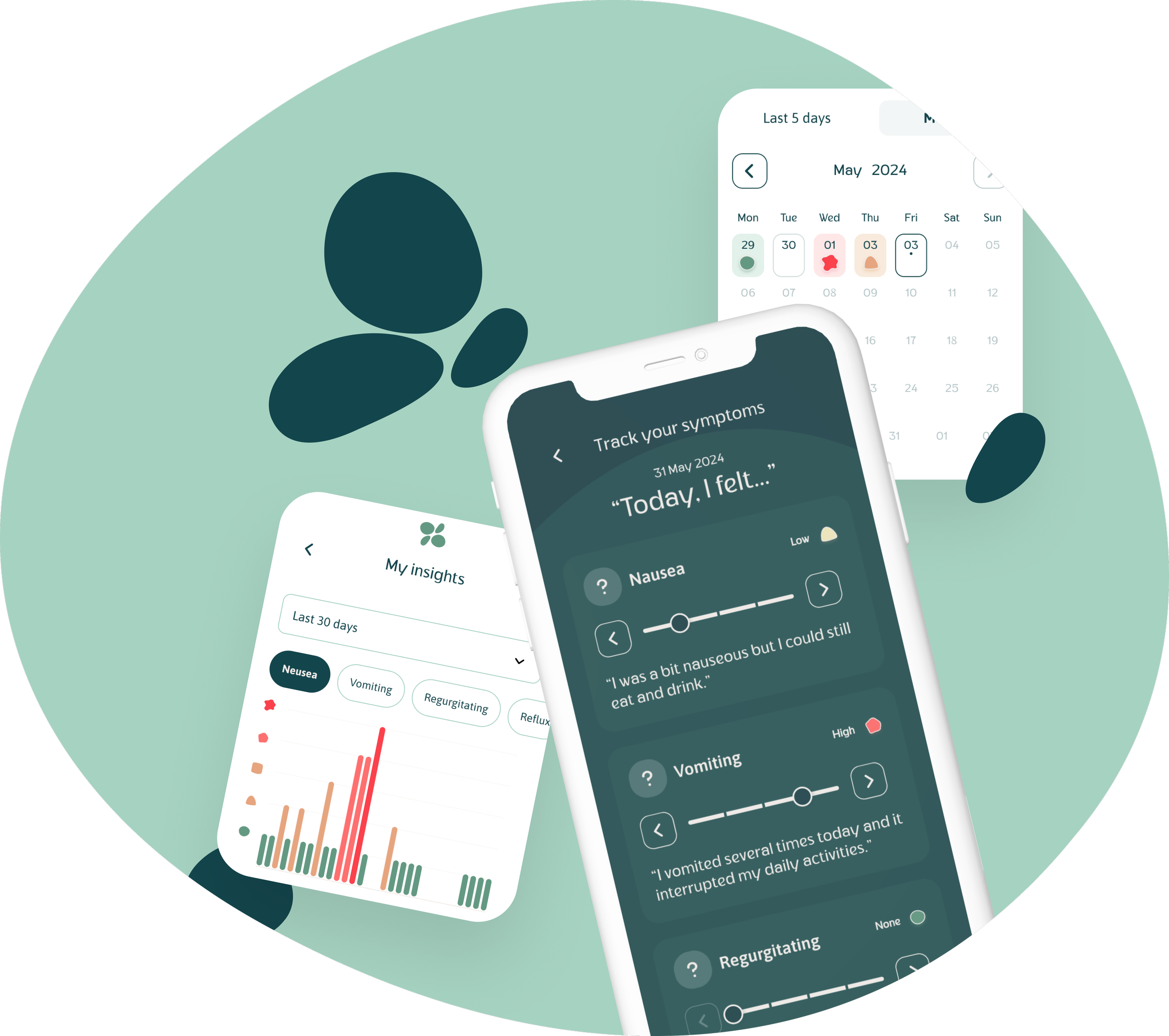
Get more support in the Prospero Health App
The app shows articles like this to you at the right time — in the right place.
Prospero Health App is FREE, and made for Australians using Obesity Management Medications or recovering from bariatric surgery.
References
Eating disorders [Internet]. Australia: Healthdirect; c2026 [reviewed 2025 Aug; cited 2026 Mar 18]. Available from: https://www.healthdirect.gov.au/eating-disorders
Eating Disorders [Internet]. United States: MedlinePlus [updated 2025 May 16; cited 2026 Mar 18]. Available from: https://medlineplus.gov/eatingdisorders.html
Brode CS, Mitchell JE. Problematic Eating Behaviors and Eating Disorders Associated with Bariatric Surgery. Psychiatr Clin North Am. 2019;42(2):287-97. https://doi.org/10.1016/j.psc.2019.01.014
People with Higher Weight [Internet]. Australia: National Eating Disorders Collaboration [cited 2026 Mar 18]. Available from: https://nedc.com.au/eating-disorders/eating-disorders-explained/eating-disorders-and-people-with-higher-weight
Disordered Eating & Dieting [Internet]. Australia: National Eating Disorders Collaboration [cited 2026 Mar 18]. Available from: https://nedc.com.au/eating-disorders/eating-disorders-explained/disordered-eating-and-dieting#:~:text=Disordered%20eating%20sits%20on%20a,irregular%20or%20inflexible%20eating%20patterns.
Disordered Eating vs. Eating Disorders [Internet]. United States: National Eating Disorders Association [cited 2026 Mar 18]. Available from: https://www.nationaleatingdisorders.org/what-is-the-difference-between-disordered-eating-and-eating-disorders/
Chong MC, Ko TYL, le Roux PL, le Roux CW. Changes in Eating Behaviour During Treatment With Obesity Medications. Clin Obes. 2026;16(1):e70065. https://doi.org/10.1111/cob.70065
Lynch A, Kozak AT, Zalesin KC. “The stomach I have now has a brain connection:” changes in experiences of hunger and fullness following bariatric surgery. Appetite. 2022;179:106271.
Ivezaj V, Carr MM, Brode C, Devlin M, Heinberg LJ, Kalarchian MA, et al. Disordered eating following bariatric surgery: a review of measurement and conceptual considerations. Surg Obes Relat Dis. 2021;17(8):1510-20. https://doi.org/10.1016/j.soard.2021.03.008
Wadden TA, Bartlett S, Letizia KA, Foster GD, Stunkard AJ, Conill A. Relationship of dieting history to resting metabolic rate, body composition, eating behavior, and subsequent weight loss. The American Journal of Clinical Nutrition. 1992;56(1):203S-8S. https://doi.org/10.1093/ajcn/56.1.203S
Cella S, Fei L, D'Amico R, Giardiello C, Allaria A, Cotrufo P. Binge Eating Disorder and Related Features in Bariatric Surgery Candidates. Open Med (Wars). 2019;14:407-15. https://doi.org/10.1515/med-2019-0043
El Ghoch M, Calugi S, Dalle Grave R. Weight cycling in adults with severe obesity: A longitudinal study. Nutr Diet. 2018;75(3):256-62. https://doi.org/10.1111/1747-0080.12387
Price C, Fraser K, Bartel S, Vallis M, Jad A, Keshen A. Screening and Treating Disordered Eating in Weight Loss Surgery: A Rapid Review of Current Practices and Future Directions. Obesities [Internet]. 2025; 5(2):19. https://doi.org/10.3390/obesities5020019
Wadden TA, Faulconbridge LF, Jones-Corneille LR, Sarwer DB, Fabricatore AN, Thomas JG, et al. Binge eating disorder and the outcome of bariatric surgery at one year: a prospective, observational study. Obesity (Silver Spring). 2011;19(6):1220-8. https://doi.org/10.1038/oby.2010.336
Alger-Mayer S, Rosati C, Polimeni JM, Malone M. Preoperative Binge Eating Status and Gastric Bypass Surgery: A Long-Term Outcome Study. Obesity Surgery. 2009;19(2):139-45. https://doi.org/10.1007/s11695-008-9540-9
Boan J, Kolotkin RL, Westman EC, McMahon RL, Grant JP. Binge Eating, Quality of Life and Physical Activity Improve after Roux-en-Y Gastric Bypass for Morbid Obesity. Obesity Surgery. 2004;14(3):341-8. https://doi.org/10.1381/096089204322917864
Kalarchian MA, Wilson GT, Brolin RE, Bradley L. Effects of bariatric surgery on binge eating and related psychopathology. Eating and Weight Disorders - Studies on Anorexia, Bulimia and Obesity. 1999;4(1):1-5. https://doi.org/10.1007/BF03376581
Dennis, K. Warning Signs And Symptoms [Internet]. United States: National Eating Disorders Association [cited 2026 Mar 18]. Available from: https://www.nationaleatingdisorders.org/warning-signs-and-symptoms/
Riboldi I, Carrà G. Anti-obesity Drugs for the Treatment of Binge Eating Disorder: Opportunities and Challenges. Alpha Psychiatry. 2024;25(3):312-22. https://doi.org/10.5152/alphapsychiatry.2024.241464
Richards J, Bang N, Ratliff EL, Paszkowiak MA, Khorgami Z, Khalsa SS, et al. Successful treatment of binge eating disorder with the GLP-1 agonist semaglutide: A retrospective cohort study. Obesity Pillars. 2023;7:100080. https://doi.org/10.1016/j.obpill.2023.100080
Kałas M, Stępniewska E, Gniedziejko M, Leszczyński-Czeczatka J, Siemiński M. Glucagon-like Peptide-1 Receptor Agonists in the Context of Eating Disorders: A Promising Therapeutic Option or a Double-Edged Sword? J Clin Med. 2025;14(9). https://doi.org/10.3390/jcm14093122
Dennis, K. GLP-1 Receptor Agonists and Eating Disorders [Internet]. United States: National Eating Disorders Association [cited 2026 Mar 18]. Available from: https://www.nationaleatingdisorders.org/glp-and-eating-disorders/
Radkhah H, Rahimipour Anaraki S, Parhizkar Roudsari P, Arabzadeh Bahri R, Zooravar D, Asgarian S, et al. The impact of glucagon-like peptide-1 (GLP-1) agonists in the treatment of eating disorders: a systematic review and meta-analysis. Eat Weight Disord. 2025;30(1):10. https://doi.org/10.1007/s40519-025-01720-9
Ralph AF, Brennan L, Byrne S, Caldwell B, Farmer J, Hart LM, et al. Management of eating disorders for people with higher weight: clinical practice guideline. J Eat Disord. 2022;10(1):121. https://doi.org/10.1186/s40337-022-00622-w