

Understanding Mood and Tension During Obesity Treatment

Is it normal to have low mood during obesity treatment? Read below to find out more…
This information is general in nature and does not replace personalised professional advice. Please contact your healthcare team if you have any questions or concerns.
What do we mean by “mood” and “tension”?
Mood is your general emotional state over time. It is not a quick feeling like surprise or anger. Your mood can be positive, neutral or negative. For example, some days you may feel calm or happy, and other days you may feel flat, down or grumpy [1].
Tension is how ‘wound up’ or stressed your body and mind feel as part of your mood. You might feel relaxed, restless, jittery, nervous or overwhelmed [1,2].
Changes in mood and tension are a normal part of being human.
What is considered “normal”?
A healthy mood is flexible and able to bounce back. This means you can feel different emotions that match what is happening in your life, without feeling stuck or unable to cope for long periods. A healthy level of tension can be helpful. It can give you energy, help you focus, and keep you alert and safe when needed [1,3,4].
Examples of mood:
Feeling sad after losing a loved one or a pet, but still being able to care for yourself or others.
Feeling disappointed after a setback, but still enjoying some things and feeling better with time or support.
Feeling nervous before a test, job interview or important appointment, but calming down once it is over.
Signs your mood is coping well:
Your feelings make sense for the situation [3]
You can still manage daily tasks (eg. work, study or caring for others) [3]
You bounce back with time or support [3,5]
You understand why you feel this way [5]
You believe things can improve [2]
How does obesity treatment affect mood?
During treatment you may notice:
Feeling irritable at first [6,7]
Feeling flat when food routines change [8]
Stronger emotions as your body changes [9]
Stress about following plans [10]
Fear of failure or weight regain [9]
These reactions are common, especially early on.
When is it not “normal”?
You should seek help if you notice:
Low mood or worry lasting more than 2 weeks [3,11]
Low mood making it harder to get out of bed in the morning [11]
Feelings that feel too strong for the situation [3,12]
Pulling away from normal activities (school, work, social life) [3,12]
Using food, alcohol or drugs to cope [12]
Feeling numb, exhausted or shut down [12]
Physical symptoms like stomach pain, headaches or skin rashes that you do not usually experience [13]
Thoughts about harming yourself or ending your life [11]
What can help improve mood and tension?
Many people feel some relief when they:
Talk with a health professional [3]
Do gentle movement like walking or stretching [11]
Keep a regular sleep routine [12]
Reduce alcohol [13]
Stay connected with family, friends or support groups [3,11]
Spend time outside, especially in natural light [3]
Plan short breaks to rest and relax [3]
How health professionals check mood
To decide what kind of support may be most helpful for you, your GP or mental health professional (eg. psychologist, psychiatrist, counsellor) may:
Ask about your sleep, appetite, stress and energy levels [15]
Ask about relationships, work or recent life changes [15]
Use short questionnaires to understand your mood [16]
Check for medical causes that can affect mood (eg. thyroid problems, medication side effects, long-term pain) [17]
Support services in Australia
If you are in immediate danger or think you may act on thoughts of self-harm, this is an emergency. Please contact emergency services or go to the nearest hospital straight away.
Lifeline: Call 13 11 14 or text 0477 13 11 14
Butterfly Foundation: 1800 33 4673 or chat online at https://butterfly.org.au/get-support/helpline/
Beyond Blue:1300 22 4636
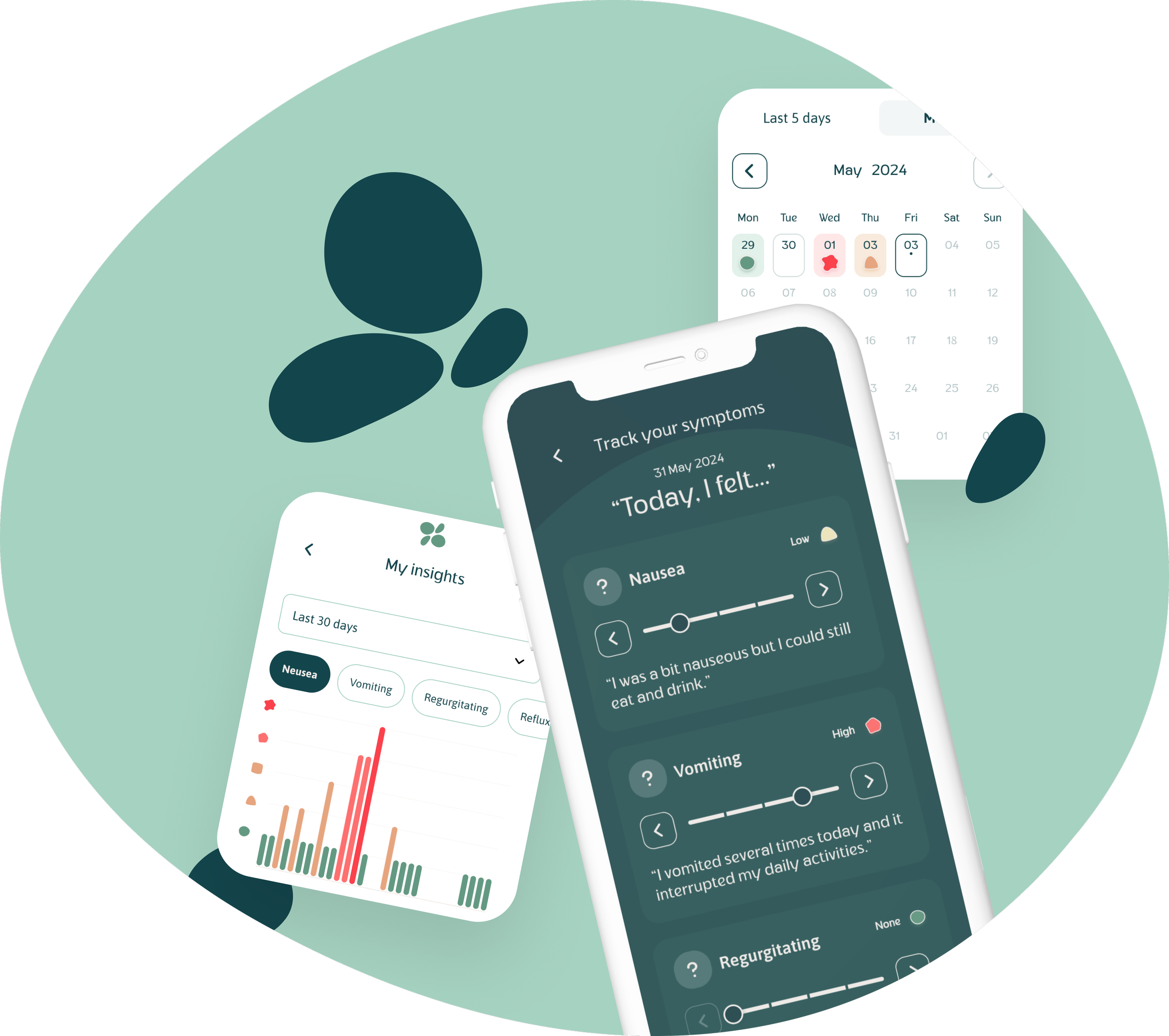
Get more support in the Prospero Health App
The app shows articles like this to you at the right time — in the right place.
Prospero Health App is FREE, and made for Australians using Obesity Management Medications or recovering from bariatric surgery.
References
Sekhon, S. and Gupta, V (2023) ‘Mood Disorder’, StatPearls [Internet].
Hasler, G (2020) ‘Understanding mood in mental disorders’, World Psychiatry: Official Journal of the World Psychiatric Association (WPA), 19(1), pp. 56-57.
Better Health Channel (2021) Monitoring your mood. https://www.betterhealth.vic.gov.au/health/healthyliving/monitoring-your-mood
Counselling in Melbourne (2019) Mood swings: what is normal and what is not? https://counsellinginmelbourne.com.au/mood-swings/
Fusar-Poli, P. et al. (2020) ‘What is good mental health? A scoping review’, European Neuropsychopharmacology, 31, pp. 33-46.
Alhalel, N. Schueller, S.M. and O'Brien, M.J (2018) ‘Association of changes in mental health with weight loss during intensive lifestyle intervention: does the timing matter?’, Obesity Science & Practice, 4(2), pp.153-158.
LighterLife (2025) Managing side effects of a very-low calorie diet (VLCD). https://www.lighterlife.com/lighterlife-com-managing-vlcd-side-effects/?srsltid=AfmBOorhpMAnw9aSLUJSPY1AIAgVrhAz-YTzhPNjcG3SWOxIVwwcVXTM
Singh, M (2014) ‘Mood, food, and obesity’, Frontiers in Psychology, 5,925.
Sarwer, D.B. and Polonsky, H.M (2018) ‘The Psychosocial Burden of Obesity’, Endocrinology and Metabolism Clinics of North America, 45(3), pp. 677-688.
Gow, M.L. et al. (2024) ‘Efficacy, Safety and Acceptability of a Very-Low-Energy Diet in Adolescents with Obesity: A Fast Track to Health Sub-Study', Nutrients, 16(18), 3125.
National Institute of Mental Health (2024) Caring for your mental health. https://www.nimh.nih.gov/health/topics/caring-for-your-mental-health
Beyond Blue (2025) How to tell if someone has poor mental health. https://www.beyondblue.org.au/get-support/support-someone/poor-mental-health
Healthline (2020) Yes, mental illness can cause physical symptoms – here's why. https://www.healthline.com/health/mental-health/mental-illness-can-cause-physical-symptoms#Are-my-aches-and-pains-caused-by-my-mental-state
Beyond Blue (2025) Alcohol and mental health. https://www.beyondblue.org.au/mental-health/alcohol-and-mental-health
Health Direct (2024) Mental health professionals. https://www.healthdirect.gov.au/mental-health-professionals
Health Direct (2024) Psychiatrists and psychologists. https://www.healthdirect.gov.au/psychiatrists-and-psychologists
Better Health Channel (2015) Assessments and evaluations for mental illness treatment. https://www.betterhealth.vic.gov.au/health/servicesandsupport/assessments-and-evaluations-for-mental-illness-treatment